
How do you give an AI agent access to your CRM, inventory system, and Google Docs without building a million custom integrations? You use the Model Context Protocol (MCP).
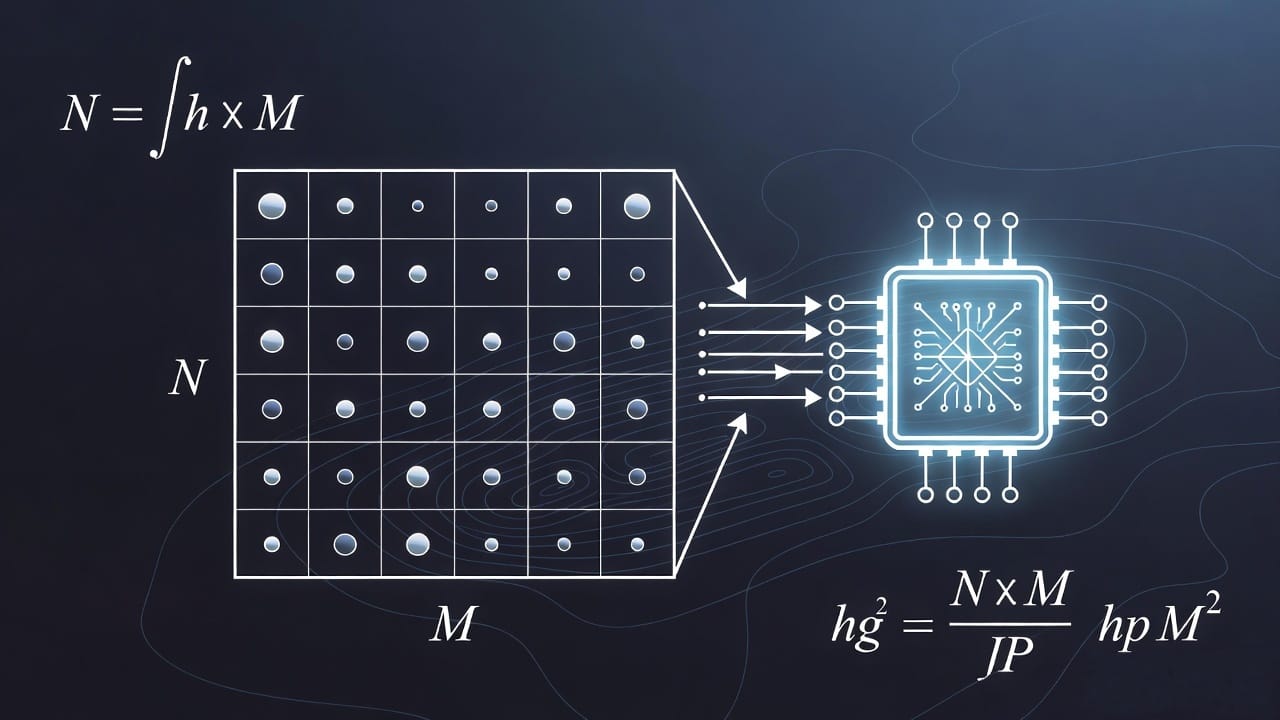
For decades, enterprises have wrestled with the “N×M integration problem”—connecting N applications to M data sources requires building N×M custom integrations.
However, Anthropic’s Model Context Protocol is changing this landscape by providing an open standard that enables developers to build secure, two-way connections between their data sources and AI-powered tools.
What Is the Model Context Protocol (MCP)?
The Model Context Protocol is an open-source standard for connecting AI applications to external systems. Think of MCP as a USB-C port for AI—instead of building separate connectors for every data source, developers now build against a single protocol.
The MCP architecture is straightforward. MCP Clients live inside AI applications and orchestrate information flow, whilst MCP Servers expose data and functionality from external systems. Consequently, AI models using Model Context Protocol can access your Google Calendar, generate applications using Figma designs, or analyse databases using natural language chat.
Why Model Context Protocol Matters: Solving the Integration Crisis
Before MCP, 10 AI applications connecting to 100 tools potentially required 1,000 different integrations. Model Context Protocol solves this by introducing a universal protocol—implement MCP once, and unlock an entire ecosystem.
MCP server downloads grew from approximately 100,000 in November 2024 to over 8 million by April 2025, reaching 97 million monthly SDK downloads (Python + TypeScript combined) by late 2025/early 2026, with over 10,000 active public MCP servers now available (directories show 8,243+ on PulseMCP and up to ~17,000–20,000+ across others like mcp.so and MCP Market).
Indian Enterprises Leading MCP Adoption
Major Indian IT giants are driving global Model Context Protocol adoption. TCS, Infosys, Wipro, and Cognizant collectively deployed over 200,000 Microsoft Copilot licences using MCP in December 2025, marking one of the largest enterprise AI rollouts globally. Furthermore, Infosys partnered directly with Anthropic to integrate MCP-powered agentic AI capabilities across their operations, whilst TCS announced a strategic collaboration with OpenAI.
These MCP deployments demonstrate substantial ROI. Microsoft described these firms as “Frontier Firms” for embedding AI into core operations across delivery, sales, finance, HR, and customer engagement. Moreover, employees report significant productivity gains when using MCP-powered agentic tools for complex workflows.
How Model Context Protocol Works
MCP operates through three fundamental building blocks:
- Tools: Functions AI agents invoke to perform actions (creating CRM records, generating invoices)
- Resources: Data sources AI agents read (documents, databases, API endpoints)
- Prompts: Specialised instructions guiding AI behaviour for specific workflows
Moreover, MCP supports multiple transport protocols—STDIO for local processes and HTTP with SSE for remote cloud deployments—ensuring flexibility across deployment scenarios.
MCP Security and Governance
Model Context Protocol was designed with enterprise security in mind. The host instantiates clients and approves servers, allowing organisations to strictly manage what AI assistants access through MCP. Furthermore, MCP enables:
- Granular permissions defining exact tool and resource access
- Tool annotations marking “read-only” or “destructive” actions
- OAuth 2.1 authentication for secure remote access
- Comprehensive audit trails tracking agent activities
Nevertheless, enterprises must remain vigilant. Security researchers identified issues including prompt injection and tool permission exploits. To address these concerns, organisations should build catalogues of approved MCP servers, implement AI gateways for additional security layers, and conduct regular security audits.
The Indian AI Market Opportunity with MCP
The timing for Model Context Protocol adoption couldn’t be better for Indian enterprises. India’s government launched a ₹10,000 crore (approximately ₹10,974 crore) AI mission to boost AI infrastructure and MCP adoption. Subsequently, agentic AI software spending is projected to reach ₹90 lakh crore globally by 2030, growing at 62.7% CAGR from 2025 to 2030.
Indian companies are well-positioned to capture this growth using Model Context Protocol. Over 80% of Indian organisations are actively exploring autonomous agent development with MCP, whilst India’s agentic AI market is estimated to reach ₹5,390 crore in 2026. Additionally, Indian IT companies collectively export technology services worth over ₹20 lakh crore annually, positioning them to lead global MCP enterprise AI adoption.
Implementing Model Context Protocol in Your Organisation
Adopting MCP complements existing infrastructure. Start with pre-built MCP servers for Google Drive, Slack, GitHub, and Postgres. Then identify high-impact Model Context Protocol use cases:
Customer Support: Connect AI agents to ticketing systems using MCP for automatic triage
Data Analysis: Enable database queries through Model Context Protocol without SQL expertise
Development Workflows: Access repositories via MCP through unified interfaces
Subsequently, build custom MCP servers for proprietary systems using available SDKs in Python, TypeScript, Java, C#, PHP, and Kotlin.
The Future of Business AI
The MCP ecosystem is experiencing explosive growth. OpenAI, Google DeepMind, Microsoft, and AWS have all embraced MCP, ensuring cross-platform compatibility. Indian enterprises are particularly well-positioned, given their scale, technical expertise, and strong client relationships globally.
Just as TCP/IP enabled the Internet to flourish, MCP is becoming the universal protocol enabling enterprise AI to reach its full potential. Indian IT leaders are already demonstrating this—with TCS, Infosys, Wipro, and Cognizant setting global benchmarks for agentic AI deployment.
Start small. Build one MCP server for a high-value use case. Experiment with pre-built servers. Learn what works. Then scale systematically. The new “TCP/IP” of business AI is here, and Indian enterprises are leading the way.

This post was very helpful and easy to understand.
Thanks for sharing such useful information.