SEO vs AEO vs GEO in one line: SEO ranks your pages in search results, AEO makes your page the direct answer, and GEO gets your brand cited by intelligent tools. Together, they decide how customers find you today.
Key Takeaways
- SEO helps your pages rank in a list of links.
- AEO helps your page become the one direct answer.
- GEO helps intelligent tools name your brand in their replies.
- One clear, well-structured page can win all three.
What Is SEO?
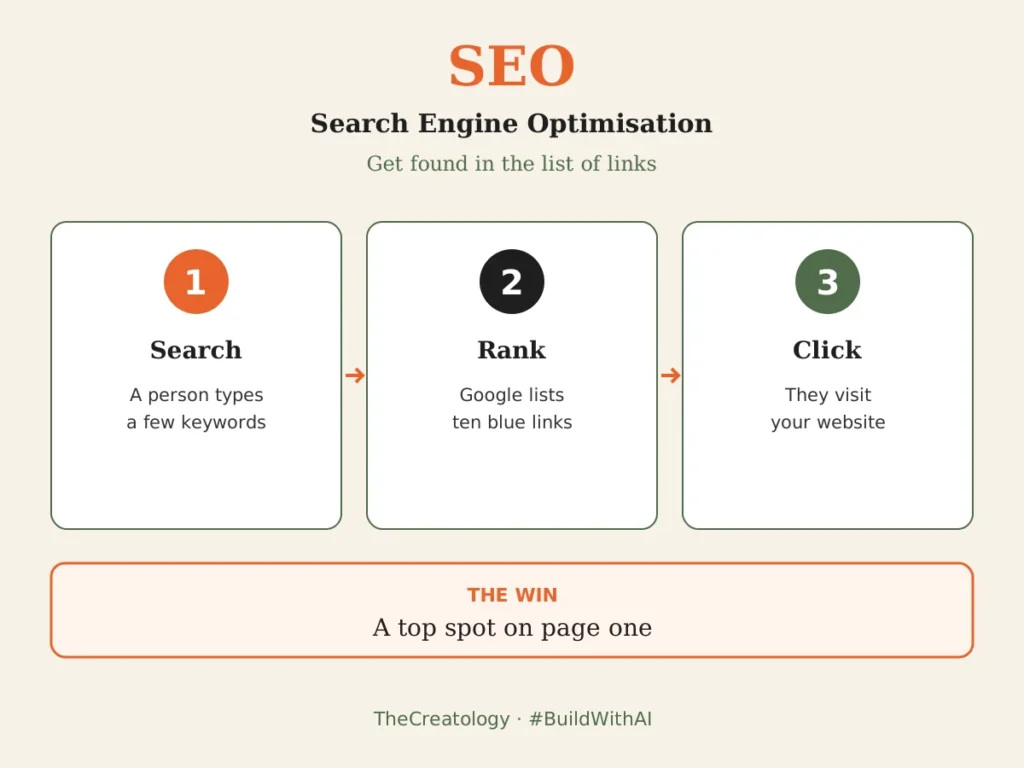
Definition: SEO, or Search Engine Optimisation, helps your website rank high in search results.
Think of it as a shop window on a busy street. A person types a few keywords, and Google shows ten blue links. Consequently, the higher you sit, the more clicks you earn. Moreover, good titles, fast pages and helpful content all lift your rank.
What Is AEO?
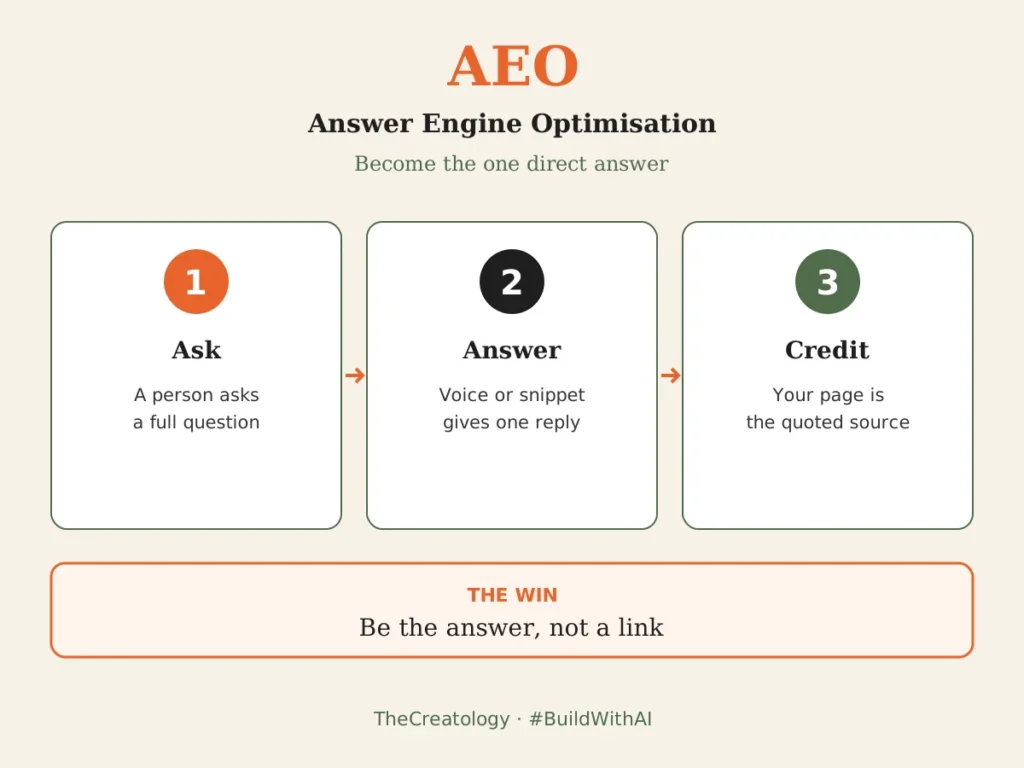
Definition: AEO, or Answer Engine Optimisation, makes your page the single answer to a question.
Here, the shop window becomes a helpful receptionist. For instance, people ask full questions, such as “How long does a website take to build?” Voice assistants and featured snippets then read one reply. Therefore, clear questions and short, direct answers matter most.
What Is GEO?
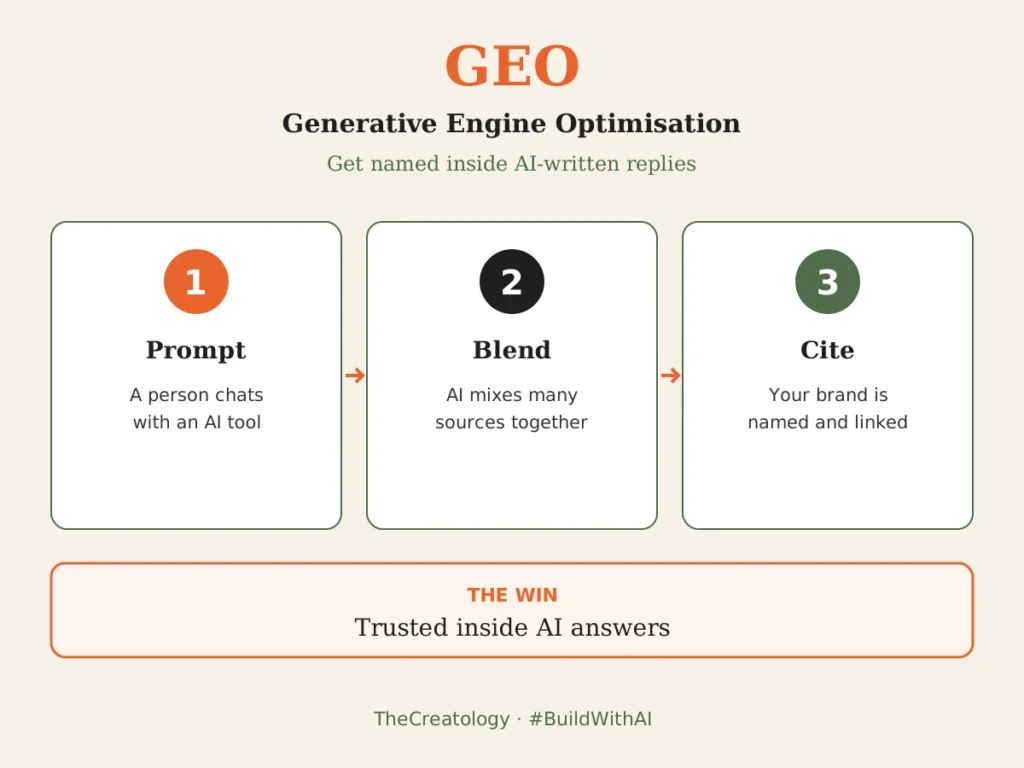
Definition: GEO, or Generative Engine Optimisation, helps intelligent tools mention and cite your brand.
Now picture an expert advisor who has read the whole internet. First, a person chats with an intelligent tool, and it blends many sources into one reply. However, it only names brands it trusts. As a result, facts, clear definitions and a consistent name across the web win the mention.
Why SEO vs AEO vs GEO Matters Now
Customer habits are shifting fast. Today, many people ask an intelligent tool before they ever visit a website. As a result, a business that only chases rankings may lose visibility where buyers now decide. Meanwhile, the firms that learn all three early build trust that compounds every month.
SEO vs AEO vs GEO: The Key Differences
| SEO | AEO | GEO | |
|---|---|---|---|
| Where it shows | Search results | Snippets and voice | Intelligent tool replies |
| User action | Types keywords | Asks a question | Chats in full sentences |
| Your goal | Rank high | Be the answer | Be cited |
| Success sign | Clicks | Quoted answer | Brand mention |
How to Win All Three
Fortunately, you do not need three separate plans. Instead, one smart page can serve every engine.
- Start with a definition. Answer the main question in the first lines.
- Use question headings. Match how real people ask.
- Add facts and examples. Intelligent tools prefer specific, checkable details.
- Keep your brand consistent. Use the same name and details everywhere.
Furthermore, follow Google’s guide to helpful, people-first content, since every engine rewards it. For structured product data, read our guide to preparing e-commerce for shopping agents.
SEO vs AEO vs GEO: Common Questions
Is SEO dead because of GEO?
No. Intelligent tools still read top-ranking pages, so strong SEO feeds both AEO and GEO.
Which one should a small business start with?
Start with SEO basics. Then, add question headings for AEO and clear facts for GEO.
How do I know if GEO is working?
Ask popular intelligent tools about your field. If they name or link your brand, it is working. Also, track referral visits from those tools in your analytics.
What is the difference between AEO and GEO?
AEO aims for one short, direct answer, often read aloud. In contrast, GEO aims for a mention inside a longer reply that blends many sources.
Does GEO need special tools or code?
Not at first. Instead, clear writing, structured data and honest facts do most of the work.
In short, rank today, answer tomorrow, and become the trusted source for good.
Want a page built for all three engines? Talk to TheCreatology and #BuildWithAI.

Comments
Felt something? How about posting a comment below…