
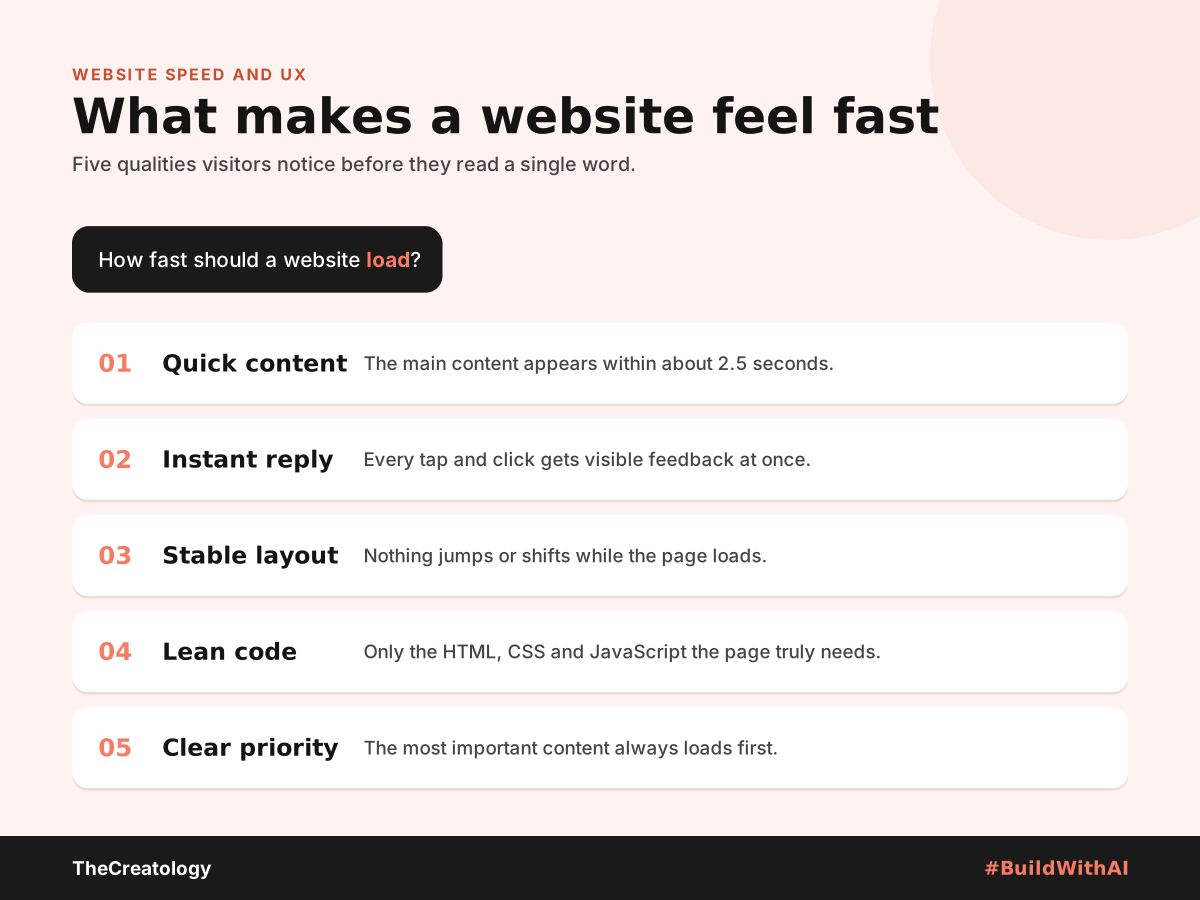
How fast should a website load? Ideally, its main content should appear within about 2.5 seconds, and every tap or click should get a visible response almost at once. That is the line Google uses for a good experience. However, speed is not only a number on a report. It is how quickly a visitor feels that the page is ready to use.
Why Website Speed Matters for UX
Speed is the first design decision a visitor notices. Before they read a headline or admire a layout, they wait. If that wait feels long, the rest of the design struggles to win them back.
First impressions form in moments
People judge a page very quickly. A slow start suggests a careless brand, even when the content is excellent. In contrast, a quick start builds confidence before a single word is read.
Slow pages quietly lose trust
Delay also creates doubt. Did the button work? Is the form sending? When feedback lags, users tap again, leave, or assume the site is broken. As a result, slow sites often lose sales and enquiries they never even see.
How Fast Should a Website Load? The Three Moments That Matter
Rather than chase one magic number, think about three moments in every visit.
- It appears. The main content, usually a heading or hero image, shows up quickly.
- It responds. Taps, clicks and key presses give instant visual feedback.
- It stays still. Nothing jumps or shifts while the visitor reads.
Google measures these moments through its Core Web Vitals. Together, they describe speed the way a person experiences it, not the way a server logs it.
Speed Is a Feeling as Well as a Fact
Two pages can load in the same time and still feel different. One shows useful content straight away. The other shows a blank screen, then everything at once. Naturally, visitors prefer the first.
Designers call this perceived performance. For example, showing text before decorative images, or keeping space for content that is still on its way, makes the wait feel shorter. Good design uses these ideas on purpose.
Where Website Speed Is Usually Lost
Most slow pages share the same habits. Fortunately, they all come back to the three files every browser handles: HTML, CSS and JavaScript.
- Large images sent at full size to small screens.
- Stylesheets full of rules the page never uses.
- JavaScript that loads before it is needed, or is never needed at all.
- Several web fonts that stop text from showing.
- Third-party scripts for chat, tracking or ads that compete for attention.
Each one adds weight. Therefore, the fastest pages do not rely on clever tricks. Instead, they come from restraint.
A Quick PageSpeed Tip
PageSpeed tip: When you run a page through Google PageSpeed Insights, look at the real-user data first, if it is available. It reflects real visitors on real devices. Lab scores are useful for testing, but field data shows what your users actually feel.
Frequently Asked Questions
What is a good page load time?
Aim for the main content to appear within about 2.5 seconds on a typical mobile connection. Faster is always better, but this is the point Google treats as good.
Does website speed affect SEO?
Yes. Page experience signals, including Core Web Vitals, form part of how Google assesses pages. More importantly, speed decides whether visitors stay long enough to read, click and convert.
Should I test on mobile or desktop?
Test both, but start with mobile. Phones often have slower processors and weaker connections, so they reveal problems that desktops hide.
The Takeaway
So, how fast should a website load? Fast enough that visitors never think about it. At TheCreatology, we treat speed as part of design, not a fix added at the end. When content appears quickly, responds instantly and stays still, the experience simply feels right.




Comments
Felt something? How about posting a comment below…