A slow server stops intelligent tools from citing your site, because they skip pages that fail to load when they look. Tools like ChatGPT fetch pages live while they build an answer. So, if your page times out, a faster competitor gets quoted instead.
Key Takeaways
- Intelligent tools often read pages in real time.
- Pages that keep failing earn no citations at all.
- Great content cannot help if the server will not answer.
- Uptime and speed are now part of GEO.
How Intelligent Tools Read Your Site
When someone asks ChatGPT or Perplexity a question, the tool often searches the web first. Then, it fetches a handful of pages and reads them within seconds. Unlike Google, it rarely waits or retries. In other words, every visit is a single chance.
What the Data Shows
The finding: pages that failed more than three-quarters of the time got zero citations.
That is a stark result. A page may rank well on Google, yet still vanish from intelligent answers. Consequently, a slow server quietly erases your best content from a growing source of traffic.
Why a Slow Server Fails the Test
Timeouts
Intelligent tools give each page only a few seconds. A slow first response simply runs out of time.
Overloaded Hosting
Cheap shared plans often stall under busy traffic. As a result, bot visits fail first.
Over-Eager Firewalls
Some security rules block every unfamiliar bot. However, that can block the tools you want citing you.
Heavy Pages
Bloated scripts slow every request. Meanwhile, the tool moves on to a lighter page.
How to Tell If Bots Are Failing
Your server logs hold the answer. Look for visits from known answer bots, such as GPTBot or PerplexityBot. Then, check their status codes. A steady stream of timeouts or server errors means bots are leaving empty-handed. Meanwhile, uptime tools show how often your site goes down. If either looks poor, fix the slow server before you rewrite a single page.
How to Keep Your Site Citable
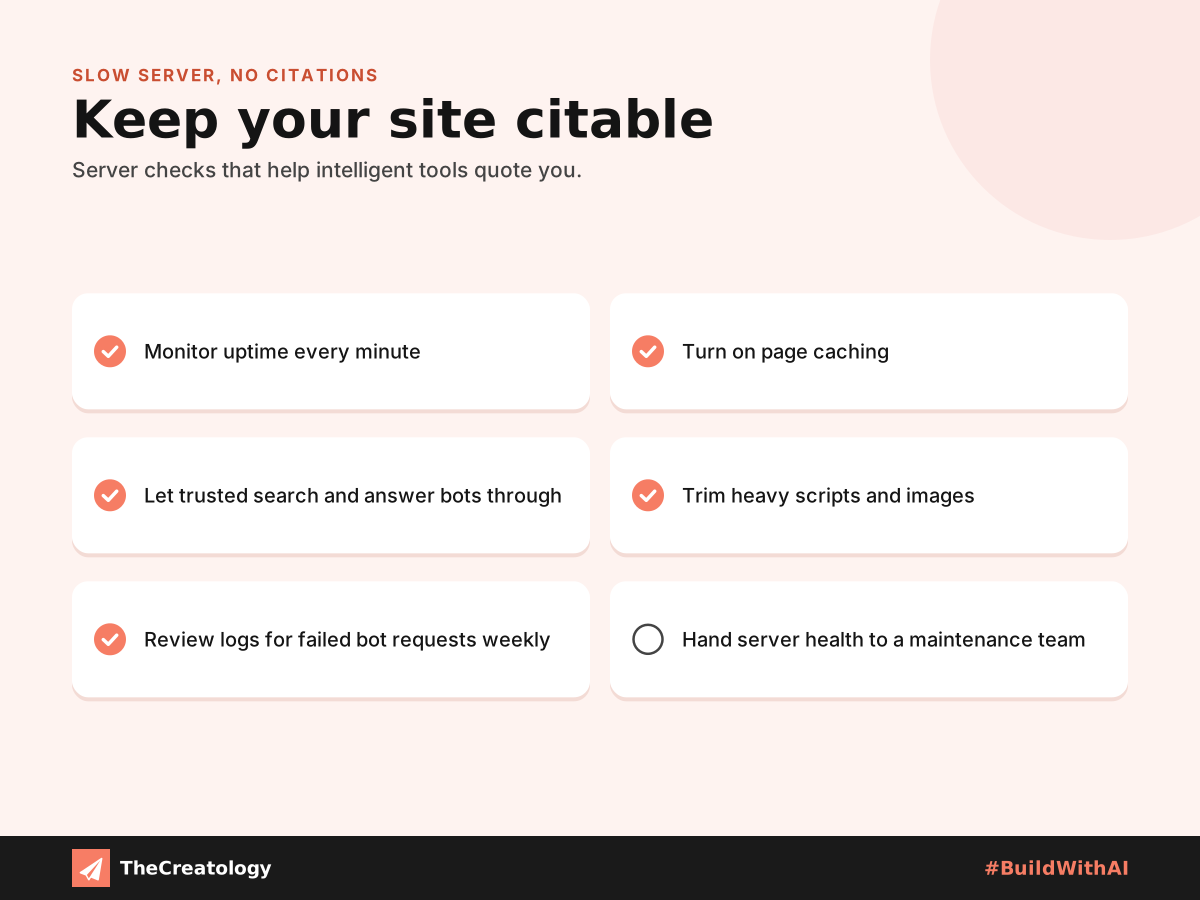
- Monitor uptime every minute, not once a day.
- Use page caching, so the server answers instantly.
- Check your firewall allows trusted search and answer bots.
- Trim heavy scripts and oversized images.
- Review server logs for failed bot requests each week.
Speed and structure work together. Once your server answers reliably, write content intelligent tools want to quote.
Quick check: Run a mobile PageSpeed test and note the server response time. If it is slow, start with hosting and caching.
Slow Server and Citations: Common Questions
Does a slow server hurt Google rankings too?
Yes, indirectly. Slow pages frustrate visitors and weaken page experience signals.
Should I block intelligent tool bots?
Only if you do not want citations. Blocking them removes you from their answers entirely.
Who should watch server health?
Ideally, a maintenance team that checks uptime, logs and speed every week.
Does a CDN help intelligent tools reach my site?
Yes. A CDN serves cached pages from nearby servers, so responses arrive faster and fail less often.
How fast should my server respond?
As fast as possible. Generally, aim for a first response well under a second.
In short, if your server cannot answer, intelligent tools cannot quote you.
Want a site that stays fast and citable around the clock? Talk to TheCreatology about website maintenance and #BuildWithAI.




Comments
Felt something? How about posting a comment below…