What does AI safety for kids look like? It means teaching children to protect their personal details, use safe settings and always talk to a parent when something feels wrong.
This is Part 5, the final part of our Diwali series for Indian parents.
Key Takeaways
- Not everything online is what it seems.
- Personal details stay private, always.
- Safe settings are a parent’s job.
- A child who can speak freely is a safe child.
When Ravan Came as a Sage
Ravan did not arrive as a demon king. Instead, he came dressed as a gentle sage asking for alms. Because he looked kind, Sita stepped across the line. That single moment changed everything.
Online, danger also wears a friendly face. A fake app, a stranger or a tricky message can look harmless. Therefore, children must learn to look past the costume.
Simply put: AI safety for kids means protecting their privacy, choosing trusted tools and keeping a parent in the loop.
Be Their Jatayu
Remember brave Jatayu, who flew to protect Sita? As parents, we are that guardian. However, we cannot watch every second. So, our best protection is a child who trusts us enough to tell us anything.
Tip 5: Spot the Disguise, Stay Safe
Keep Personal Details Private
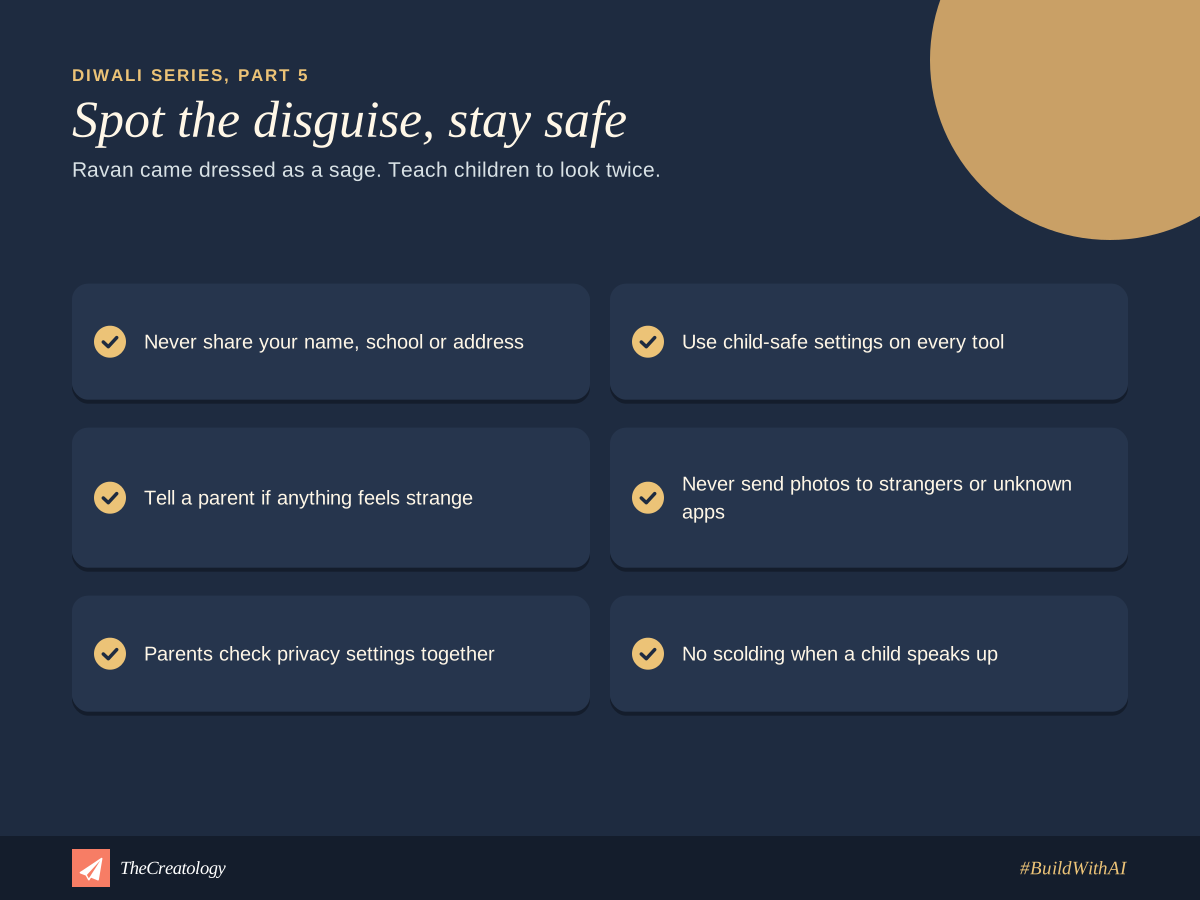
First, teach children never to share their full name, school, address or photos with any tool or stranger. Make it as natural as looking both ways before crossing.
Set Up Safe Settings Together
Next, choose trusted, well-known tools. Then, turn on child-safe or family settings where they exist. Additionally, check the privacy settings once a month.
Never Scold for Speaking Up
Finally, this one matters most. If your child tells you something felt strange, thank them. Never punish honesty. Otherwise, next time they may stay quiet.
Try this Diwali: play “real or disguise?” Show your child a few messages and ask which ones look like tricks.
Trust Is the Strongest Shield
Settings and rules help. However, trust protects children best. When a child knows you will listen calmly, they will come to you first. Similarly, when you explore tools together, they see you as a guide, not a guard. Ultimately, AI safety for kids begins at the dinner table. For a safe way to start, read about family-friendly study tools.
Privacy, Protection and Responsibility
Child safety experts agree on a simple point: privacy, trust and open talk matter most. So, good AI safety for kids mixes safe settings with warm family chats. Also, global groups now put children’s safety first. For instance, UNICEF’s policy guidance on AI for children asks for privacy, safety and care in every tool.
Unfortunately, strangers, unfamiliar applications and unexpected messages can hide behind a friendly face. Therefore, children need to recognise tricks and feel comfortable speaking up. Review privacy settings together regularly, and keep the conversation relaxed. Ultimately, a child who understands the warning signs and trusts you will ask for help early, without fear or embarrassment.
AI Safety for Kids: Common Questions
Are intelligent tools safe for children?
Trusted tools can be safe with the right settings and a parent nearby. Always check each tool’s age rules.
What should my child never share?
Their full name, school, address, phone number, passwords and photos.
How do I start this conversation?
Use the Ravan story. Children understand disguises easily, and the lesson stays with them.
The Five Diwali Lessons, Together
Light the lamp, but let them walk. Look twice at the golden deer. Build the bridge yourself. Respect the Lakshman Rekha. And finally, spot the disguise. Together, these five lessons let children use intelligent tools fearlessly and wisely.
Guide them, trust them, and let them shine. Happy Diwali.
Wishing your family light, learning and safety this festive season, from all of us at TheCreatology.




Comments
Felt something? How about posting a comment below…