
How much AI screen time for kids is right? There is no magic number. Instead, draw a clear, loving line, agree it together, and follow it as a family.
This is Part 4 of our Diwali series for Indian parents, with one Ramayana lesson in each post.
Key Takeaways
- Limits are a sign of love, not punishment.
- Agree the rules with your child, not for them.
- Keep tools in shared spaces and away from meals.
- Parents must follow the same line.
The Line Lakshman Drew
Before leaving the hut, Lakshman drew a line on the ground. He asked Sita to stay inside it. That line was not a cage. Rather, it was protection, drawn with love.
Our homes need a Lakshman Rekha for screens too. Intelligent tools are wonderful. Still, too much screen time can steal sleep, play and family moments. So, a gentle line keeps the good and keeps out the harm.
Simply put: a family Lakshman Rekha is a set of simple rules on when, where and how long children use intelligent tools.
Why Children Accept Fair Limits
Children push against rules they do not understand. However, they respect rules they helped to make. Therefore, sit together and explain why each limit matters. Above all, keep the tone warm, not strict.
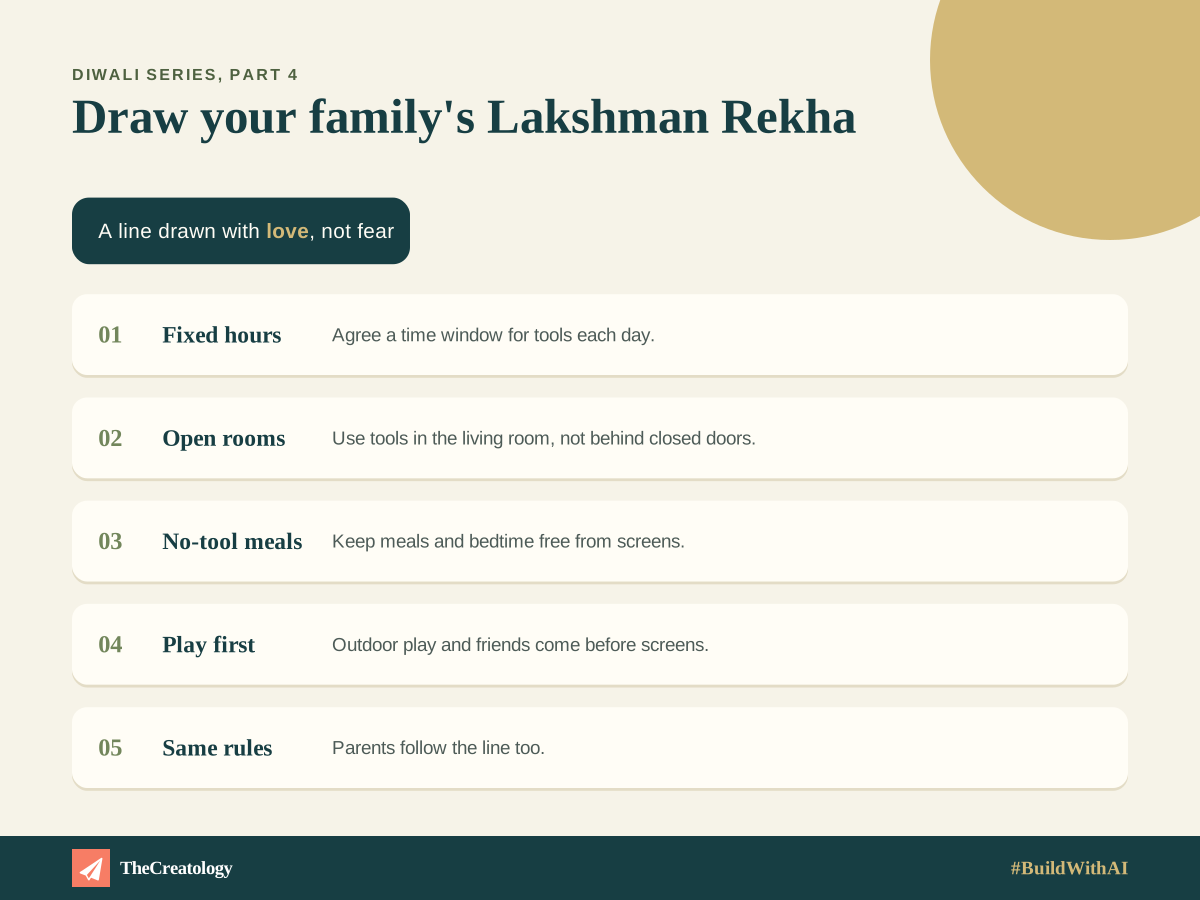
Tip 4: Draw Your Family’s Line
Fix the Hours
First, agree a daily window for tools, such as after homework and before dinner. As a result, nobody argues every evening.
Keep the Doors Open
Next, use tools in the living room, not behind closed doors. This is not about spying. Instead, it simply keeps learning shared and open.
Protect Meals, Sleep and Play
Then, keep meals and bedtime screen-free. Likewise, outdoor play and time with friends come first. Finally, follow the same rules yourself. Children copy what we do, not what we say.
Try this Diwali: keep all screens away during puja and the family meal. Notice how much more you all talk.
Review the Line Together
Children grow, so the line should grow too. Therefore, review your family rules every few months. For example, an older child may earn more time for a school project. Meanwhile, keep the heart of the rule the same: balance. Good AI screen time for kids is time spent learning, creating and sharing. To make that time count, explore our guide to focused study with intelligent tools.
Balancing Technology and Wellbeing
Paediatric specialists consistently associate healthy routines with adequate sleep, physical activity and emotional stability. Consequently, sensible AI screen time for kids depends on balance, consistency and thoughtful family agreements. Furthermore, international organisations increasingly recognise children’s wellbeing within digital environments. For instance, UNICEF’s policy guidance on artificial intelligence for children emphasises wellbeing, protection and developmentally appropriate experiences.
Of course, these tools can help children learn so much. But too much time on screens can tire the eyes and steal time from friends. So, keep a steady routine and some screen-free festival days. Above all, show the same habits yourself, since children copy what they see. A line drawn with care keeps both learning and childhood safe and happy.
AI Screen Time for Kids: Common Questions
How many hours of screen time are healthy?
It depends on age and need. Ask your child’s paediatrician for advice, and follow it with clear family rules.
Does learning on intelligent tools count as screen time?
Yes. Learning time is better than mindless scrolling. Even so, eyes and bodies still need rest.
What if my child breaks the rule?
Stay calm. Talk about why the line exists, and agree a fair next step together.
Draw the line with love, and your child will happily stay inside it.
Next in the series: Ravan’s disguise, and how to keep children safe with intelligent tools. Happy Diwali from TheCreatology.




Comments
Felt something? How about posting a comment below…